Blog
Give us a call today

Call Us : +1 (626) 798-0558

Skilled Nursing Vs Assisted Living For Progressive Conditions
Progressive conditions change over time. Needs that begin with minimal support can gradually evolve into more complex medical and functional care requirements. Choosing between skilled nursing and assisted living becomes less about preference and more about matching the level of care to the condition’s trajectory.
Understanding how each care setting functions in real-world scenarios helps families and individuals make decisions that remain appropriate as conditions advance. The differences are not only in services offered but in staffing, clinical oversight, and the ability to respond to change.
What Defines Progressive Conditions In Long-Term Care
Progressive conditions are those that worsen over time, often affecting physical ability, cognition, or both. Common examples include Parkinson’s disease, multiple sclerosis, Alzheimer’s disease, and certain cardiovascular or respiratory illnesses.
These conditions rarely follow a fixed timeline. Some individuals may remain stable for extended periods, while others experience steady or unpredictable decline. Care planning must account for this variability, especially when anticipating increased assistance with mobility, medication management, and daily living tasks.
Core Differences Between Skilled Nursing And Assisted Living
Assisted living is designed for individuals who need help with daily activities such as dressing, bathing, and medication reminders, but who do not require ongoing medical supervision. It operates with a focus on personal support and a residential environment.
Skilled nursing, by contrast, provides clinical care delivered by licensed nurses and supported by medical professionals. This includes monitoring health conditions, administering treatments, and managing more complex needs such as wound care or rehabilitation.
When conditions are progressive, the distinction becomes clearer over time. Assisted living may meet early needs, but it does not typically provide the clinical infrastructure required for advanced stages.
How Care Needs Evolve Over Time
In early stages, individuals may need only intermittent help, such as reminders or light assistance. As a condition progresses, needs often expand to include mobility support, fall prevention, and more structured daily routines.
Later stages may involve significant physical dependency, cognitive impairment, or the need for continuous medical oversight. This shift is where the capabilities of each setting are tested. Assisted living may struggle to adapt when care becomes more medically complex or continuous.
Medical Oversight And Clinical Support
Assisted living communities typically have limited clinical staff. While some offer access to nurses, coverage is not always continuous, and medical care is often coordinated through external providers.
Skilled nursing environments maintain consistent clinical staffing, including registered nurses and licensed vocational nurses. This allows for ongoing monitoring of vital signs, medication adjustments, and early identification of complications.
For progressive conditions that involve changing symptoms or increased risk, this level of oversight can influence how quickly issues are addressed and managed.
Daily Living Support And Functional Assistance
Both assisted living and skilled nursing provide help with activities of daily living. However, the depth and consistency of that assistance differ.
In assisted living, support is typically scheduled and based on a resident’s current level of independence. In skilled nursing, assistance is more continuous and responsive to changing conditions. This includes repositioning, feeding support, and close supervision for individuals at risk of injury or decline.
As functional ability decreases, the structured and hands-on approach in skilled nursing becomes more aligned with the level of need.
Response To Health Changes And Emergencies
Progressive conditions often involve periods of instability, such as sudden changes in mobility, cognition, or overall health. The ability to respond quickly can affect outcomes and reduce the need for hospitalization.
Assisted living settings may rely on external emergency services or transfers to hospitals for acute issues. Skilled nursing facilities are equipped to manage many of these changes in place, with clinical staff available to assess and intervene.
This difference becomes more significant as conditions advance, and the likelihood of complications increases.
Long-Term Planning And Continuity Of Care
Planning for progressive conditions requires looking beyond current needs. A setting that works well today may not be sufficient in six months or a year.
Transitioning from assisted living to a higher level of care can be disruptive, especially for individuals with cognitive decline. Skilled nursing provides a more stable environment for long-term care when progression is expected.
Understanding how care needs may evolve helps reduce the need for future relocation and supports continuity in daily routines and clinical management.
When Assisted Living May Still Be Appropriate
Assisted living can be appropriate in the earlier phases of certain progressive conditions, particularly when individuals remain largely independent and require only minimal assistance.
It may also be suitable for those who prioritize a residential setting and have predictable, stable needs. However, this is often a temporary fit when dealing with conditions that are expected to worsen.
Regular reassessment is necessary to ensure that the level of support continues to match the individual’s condition.
When Skilled Nursing Becomes Necessary
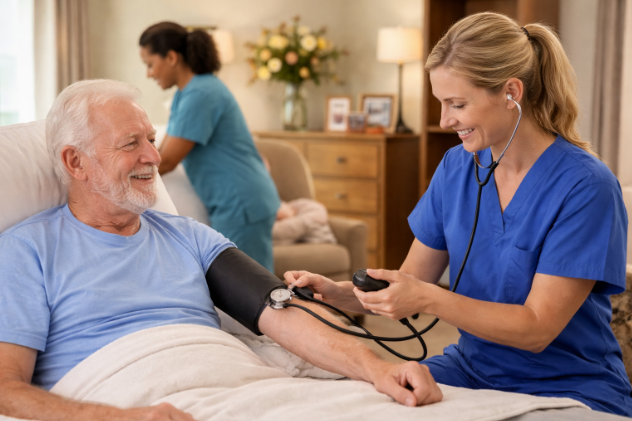 Skilled nursing becomes more appropriate when care needs include ongoing medical supervision, complex medication management, or assistance with most or all daily activities.
Conditions that involve cognitive decline, high fall risk, or frequent health fluctuations often require the structured support found in assisted living for seniors within a skilled nursing context where clinical care is consistently available.
This level of care supports both immediate needs and the likelihood of continued progression, reducing the need for repeated transitions between care settings.
Balancing Environment And Level Of Care
One of the more difficult aspects of decision-making is balancing the desire for a residential environment with the need for clinical support. Assisted living often feels less medical, while skilled nursing prioritizes health management.
For progressive conditions, the priority tends to shift over time. Comfort and familiarity remain important, but safety and medical stability often take precedence as needs increase.
Evaluating both environment and care level in practical terms helps ensure that decisions are based on current realities rather than assumptions about future stability.
Financial And Resource Considerations
Costs and coverage differ between assisted living and skilled nursing. Assisted living is often privately funded, while skilled nursing may involve different payment structures, including insurance or government programs, depending on eligibility.
Progressive conditions can lead to increasing care costs over time. Planning for these changes early allows for more realistic budgeting and reduces the risk of unexpected transitions due to financial limitations.
Understanding how care needs and costs may evolve together is an important part of long-term decision-making.