Blog
Give us a call today

Call Us : +1 (626) 798-0558
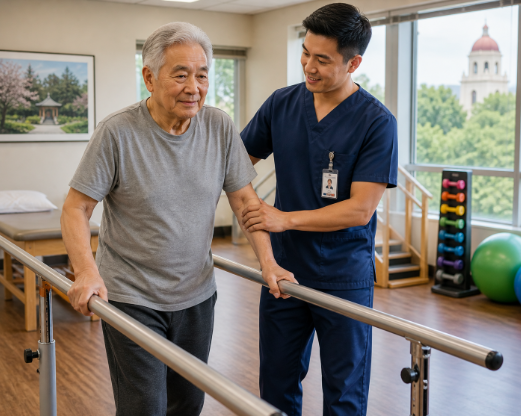
Senior Nursing Care Near Temple City and Alhambra: When Ongoing Support Is Needed
Senior nursing care is a level of professional support that goes beyond what a family member or home aide can provide, offering around-the-clock monitoring, skilled clinical staff, and structured daily care for older adults whose health needs have grown too complex for home. For families in Temple City, Alhambra, and the surrounding communities, finding that level of care close to home matters. It affects how often you can visit. It affects how quickly you can get there if something changes.
This page is written for adult children who are starting to realize that what their loved one needs has changed. Maybe a recent hospitalization made that clear. Maybe it has been a slower recognition, built over months of managing medications, watching balance worsen, or fielding calls at odd hours. Either way, you are in the right place to understand what ongoing nursing support actually involves and what your options look like in this part of the San Gabriel Valley.
What Prompts Families to Start Looking
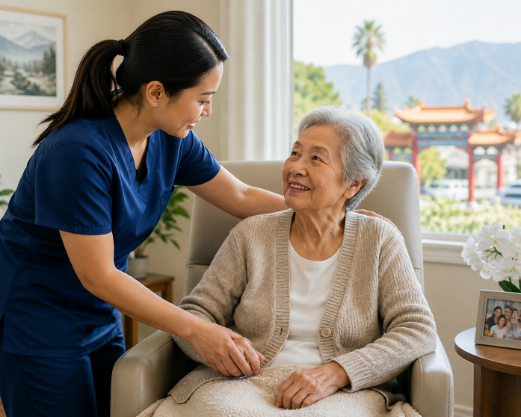 There is rarely a single moment. More often, it is a pattern. A fall that turned out to be minor, but raised the question of what happens next time. A chronic condition like heart failure, COPD, or Parkinson’s that is progressing past the point where occasional check-ins feel sufficient. A surgery recovery that went fine, but left everyone aware of how much daily coordination it required.
According to the Centers for Disease Control and Prevention, approximately 1.3 million people in the United States reside in nursing care facilities on any given day. The decision to seek that level of care is one of the most common and most difficult transitions families navigate. Knowing what triggers it helps clarify whether the timing is right.
Common situations that bring families to this decision include:
- A loved one has been discharged from a hospital or rehab stay and still requires clinical monitoring at home
- Managing multiple medications, wound care, or feeding support has become difficult to coordinate safely
- Cognitive decline has reached a point where unsupervised time creates a real safety risk
- The physical demands of caregiving at home are affecting the health of the caregiver
- A physician has recommended placement as part of a care plan
None of these situations means a family has failed. They mean the care needs have reached a threshold that professionals are trained to handle.
What Skilled Nursing Care Includes Day to Day
A skilled nursing facility is not a hospital, and it is not simply a place to live. It is a care environment structured around clinical need. Residents receive attention from licensed nurses throughout the day and night. Physicians make regular visits or are available on call. Therapists work with residents on physical, occupational, or speech goals depending on what recovery or maintenance requires.
Day-to-day life in a skilled nursing setting typically includes medication administration and management, monitoring of vital signs and health indicators, assistance with activities of daily living such as bathing, dressing, and eating, structured meals, and access to social programming. For residents working toward discharge, therapy sessions are a core part of the weekly schedule. For those in longer-term care, the emphasis shifts toward stability, comfort, and quality of daily life.
Families remain a central part of the picture. Care plans are reviewed with family members, and staff are reachable when questions or concerns come up. That communication loop matters especially for families in Temple City and Alhambra, many of whom are managing full work schedules while staying actively involved in a parent’s or grandparent’s care.
Distance and Proximity: Why It Matters More Than Families Expect
Temple City sits a few miles east of Pasadena along the 210 corridor, and Alhambra lies just south along the 10. Both communities have significant populations of older adults and multigenerational households where adult children are primary decision-makers for aging parents. When a nursing facility is closed, visits happen more often. And consistent visitation has a documented effect on resident outcomes, from reduced anxiety to faster engagement with therapy.
A facility in Pasadena is accessible from both Temple City and Alhambra without a freeway crossing that discourages midweek visits. That practicality is worth factoring into any placement decision, not just the clinical checklist.
Understanding the Difference Between Short-Term and Long-Term Stays
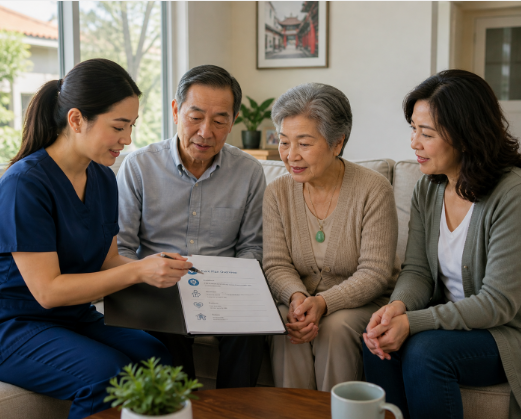 Not every family searching for senior nursing care near Temple City or Alhambra is looking for permanent placement. Many are navigating a transitional period: a loved one who needs more support than home can offer right now, but may return home once stability is established. Skilled nursing facilities serve both groups.
Short-term stays are common after hospital discharge, surgery, or a health event that requires a controlled recovery environment. Long-term care is appropriate when a condition is progressive or when the level of need has become permanent. The distinction matters for insurance coverage, for family planning, and for how staff structures the care plan.
Families who are unsure which category applies should ask the discharging physician or hospital social worker directly. That conversation often opens the door to a clear recommendation.
What Medicare and Medi-Cal Cover
Coverage is one of the first questions families ask, and it is a reasonable one. Skilled nursing care is not inexpensive, and understanding what assistance is available helps families plan realistically.
Medicare Part A covers skilled nursing facility care following a qualifying hospital stay of at least three consecutive days. Coverage is structured in benefit periods: days 1 through 20 are covered in full; days 21 through 100 require a daily copayment (in 2024, that copayment is $194.50 per day); after day 100, Medicare coverage ends. The stay must involve skilled care needs, not custodial care alone, and must be medically necessary as documented by a physician.
Medi-Cal covers skilled nursing facility care for eligible residents with no time limit, provided the level of care continues to meet medical necessity criteria. For California families, Medi-Cal is often the long-term coverage pathway once Medicare benefits are exhausted. Eligibility is based on income and asset limits, and the application process can take time, so starting early is advisable.
Private pay and long-term care insurance are the other primary options. A facility’s admissions team can walk families through what is accepted and what financial assistance programs may apply.
Questions Worth Asking Before Choosing a Facility
When a family is evaluating options for a loved one, the tour conversation matters. The environment tells part of the story. The staff interaction tells more. A few questions that consistently surface what a facility’s care culture actually looks like:
- What is the nurse-to-resident ratio on nights and weekends?
- How are care plans updated, and how often do families receive direct communication?
- What happens if a resident’s condition changes unexpectedly overnight?
- How does the facility handle transitions, either returning home or moving to a different level of care?
- What therapy services are available on-site, and how many sessions per week are typical?
Answers to these questions reveal whether a facility operates reactively or whether it runs on a proactive, relationship-based model. The difference matters more than any brochure or star rating.
Skilled Nursing Support Available Close to Temple City and Alhambra
Pasadena Nursing Center serves families throughout this part of the San Gabriel Valley, including Temple City, Alhambra, Arcadia, San Marino, Monrovia, and Sierra Madre. The facility is located at 1570 N Fair Oaks Ave in Pasadena, within a practical drive from both Temple City and Alhambra for families who want to stay closely involved in their loved one’s care.
For families weighing what level of support is right, a detailed overview of what the facility provides is available on the skilled nursing care page. Reading through it before a tour visit helps families come in with specific questions rather than starting from scratch.
Frequently Asked Questions
How far is Pasadena Nursing Center from Temple City?
Pasadena Nursing Center is located at 1570 N Fair Oaks Ave in Pasadena, approximately 5 to 7 miles from Temple City,y depending on the route. The drive along the 210 or surface streets typically takes under 15 minutes in normal traffic, making regular visits manageable for families in the area.
Does Medicare cover skilled nursing stays for residents from Alhambra or Temple City?
Medicare coverage applies based on the individual’s benefits and qualifying conditions, not their home city. What matters is whether the stay follows a qualifying three-day hospital admission and involves documented skilled care needs. Residency in Alhambra or Temple City has no effect on eligibility.
What is the difference between a skilled nursing facility and an assisted living community?
Assisted living communities provide housing, meals, and support with daily activities for largely independent residents. Skilled nursing facilities provide a higher level of clinical care, including 24-hour nursing coverage, physician oversight, and hands-on medical services. The right setting depends on the level of medical need, not preference alone.
Can a loved one return home after a skilled nursing stay?
Yes. Many skilled nursing stays are short-term and oriented specifically toward recovery and discharge. The care team works with families and the resident’s physician to plan a safe transition home, including follow-up therapy, home health coordination, or other support services as needed.
How do I start the admissions process?
Most families begin with a phone call or a tour. The admissions team at Pasadena Nursing Center can answer questions about availability, accepted insurance, and what documentation is needed. Calling directly is usually the fastest way to get clear answers and move forward at whatever pace the situation requires.
When You Are Ready to Take the Next Step
Researching care options is a sign that you are paying close attention to what your loved one needs. When you are ready to see the facility and speak with someone directly, Pasadena Nursing Center is available to answer your questions and schedule a visit.
Call (626) 888-8203 to speak with the admissions team or schedule a tour at a time that works for your family.
Pasadena Nursing Center
1570 N Fair Oaks Ave
Pasadena, CA 91103
(626) 888-8203
Serving families from Temple City, Alhambra, Arcadia, San Marino, Monrovia, Sierra Madre, and throughout the San Gabriel Valley.